
Returning to Life
on the dreams preceding my near-death experience, on dream states as epistemically meaningful, on literature and philosophy as probably necessarily embodied, on the cost of refusing these realities

This is a lightly edited version of a talk I gave last month, as part of a panel called “What Lives, What Computes?” at Rosa Luxemburg Stiftung in Berlin. I called my talk Bodily Destinies. The response was big. I’ve never been approached by so many people in person or online after an event, let alone after a philosophy event. So I’ve decided to share it here.
Brief nota bene: this is not a reconstruction of what happened during my near-death experience, just a glimpse of the dreams that preceded it, and some provisional thinking with those dreams. The NDE is its own book-length story. For the millions of NDE obsessives out there (I know we see each other), I am hopeful that it will be possible to write it exactly the way I want to write it and see it published within my lifetime. For now, there is only this. It took a decade to work up the courage to write about it. As far as NDEs go, that’s a pretty short window of time.
I wasn’t sure I’d ever write about this experience “autobiographically” or directly—let alone think aloud about it in public. But when you’re pierced by an experience that starts dissolving all borders on contact,1 there’s only so long you can hold it at the door if you are thinking, feeling, and writing through life. (Thinking-feeling-writing as life, to the best of my ability.) No matter what anyone says, I know it’s a joy to be the fool. Perpetual infancy is the precursor to wisdom, as philosophy has always taught us.
I’m so thankful to Adam Nocek, Giuseppe Longo, the School of Materialist Research, and everyone who came to that event. Thanks to all of you, I am becoming the philo-novelist in public that I’ve always been in private.
Introduction
I’m going to begin with a question and a claim: what is the cost to theory of betraying our dark, mysterious, watery origins? I mean this quite literally. What is the cost? Can we afford it? There is a cost, always, to everything, but especially to anything we might characterize as betrayal. Or dismissal, or willful ignorance.
1.
If theory is of little value to technoscientific innovation, as Adam Nocek writes in the introduction to The Organism is a Theory, anyone with an investment in innovation as not just technological advancement but also as a life-affirming consequence of our capacity for intelligence must clearly and unequivocally diagnose this as a problem (the fact that theory is of little value to technoscientific innovation) and we must especially diagnose it as a problem because theory comes from bodies. From bodies interacting with the ecosystems that make up the world the body inhabits. If theory lives in the ether or the realm of Platonic forms, it is through our interaction as bodies with the immaterial that theory is born.
This means that what we call artificial intelligence is a kind of proxy theoretician (I’m certainly not the first person to say this), taking place in a machinic body made by our (machinic-organic?) bodies. We could say that we are merely instrumentalizing all the capacities we possess that make us possible of theorizing—we tend to do this.
And instrumentalization is not inherently violent. It does little good to diagnose technoscience’s avoidance of theory, or instrumentalization of reason, as “wrong.” Except—as we are now seeing—the picture darkens considerably when the proxy theoretician of artificial intelligence (proxy intelligence) is instrumentalized in order to serve more and more powerful killing machines. We might be approaching a threshold in that regard, literally, and as we speak, right now.
2.
I want to find a way to stress that we will be the ones to solve our problems, not some abstract understanding of “technology” or “science” or, even, “knowledge.” We make those very hyped thinking machines, we have agency, we harness and work with them to build our world. It is human bodies—children—who are required to mine for the minerals used to make the wires, the glowing screens, the machines. It is human hands that assemble. The anti-suicide netting installed on the exteriors of the buildings where the machines are assembled tells us everything we need to know about the technoscientific regard for the life that animates a human body. Including expressions of life that we might broadly call “theorizing.”
The philosophical point I want to make here is that everything we make and shape and create and commit to is a function of how we attend to the world. Our ideas, theories, machines, concepts. And our understandings, collective and individual, of what these things even are.
3.
At this juncture, I want to ask an additional question: why do we want to have artificial intelligence? What is this doing for us? What is our investment here?
As my own provisional answer, I will say that right now we must be highly attuned to systems and structures that ask us to outsource our thinking, feeling, creating, being. We must be very wary of anything that puts us in a position of epistemic passivity.
4.
Back to my opening question: what is the cost—to theory—of betraying our dark, watery, fleshy, mysterious origins?
I have to take what might seem like a brief detour, but it’s not. Or, if it’s only a detour if you’re certain that marveling at the mystery of our bodily origins is not Philosophy.
I was still a graduate student, writing my dissertation, when Philippe and I decided to have a baby. As I wrote about nonknowledge and the limits of epistemic frameworks and the ways in which certain philosophical figures challenge those limits, the deepest mystery I had ever encountered was unfolding within me.2 I don’t mean pregnancy, necessarily. I mean an epistemic mystery, a biological mystery, a scientific mystery, a philosophical mystery.
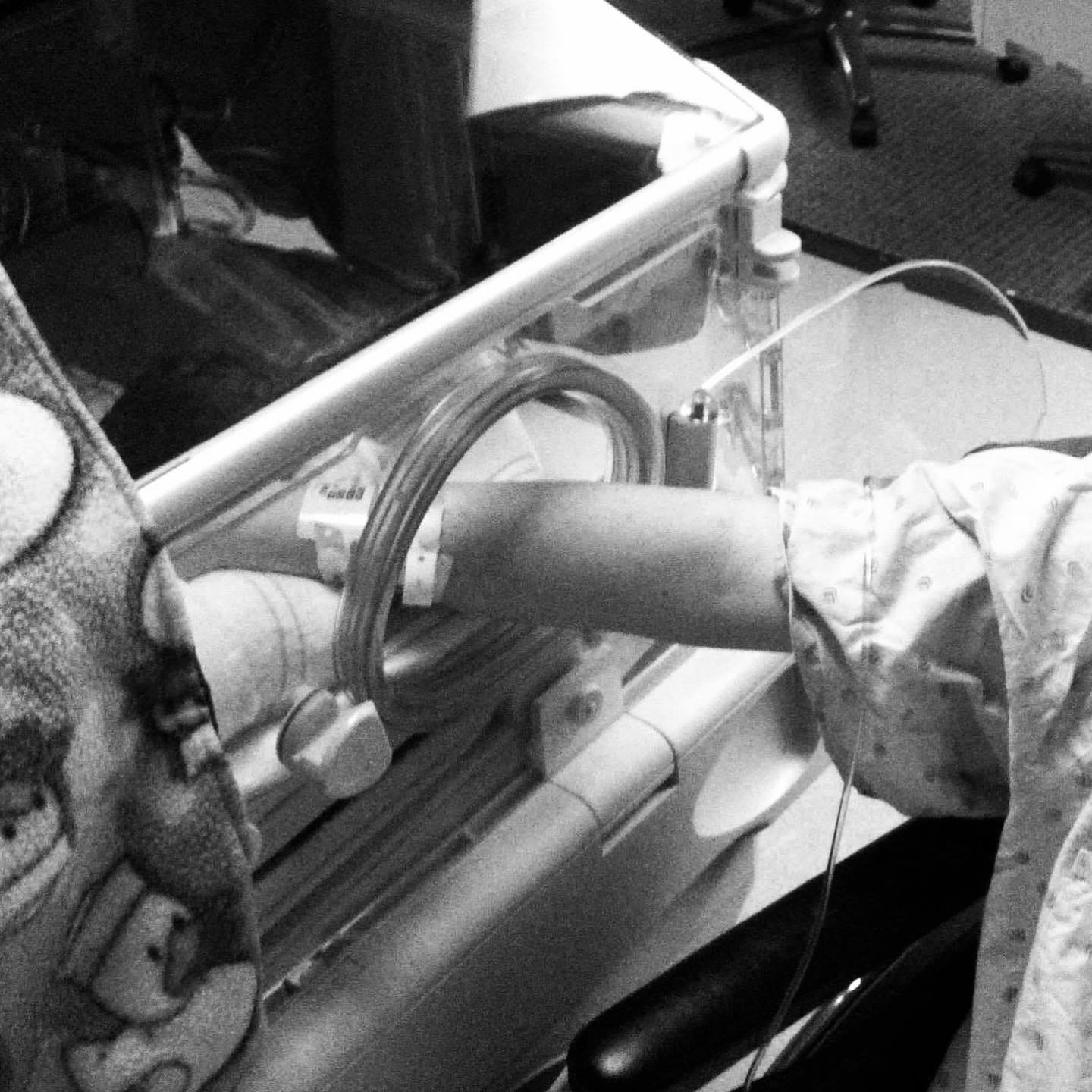
As my daughter grew within me, as her flesh and bone took shape, as my food became her food, as our bodies intertwined, I began to dream that she was communicating messages of distress to me. In my dreams, she communicated to me that she was too small. The midwife and the doctor had already determined that I was measuring small, but this wasn’t cause for concern, given my excellent health and the fact that I myself was a small baby and a small child until a dramatic teenaged lengthening. I did my best to listen only to the midwife and the doctor, but my daughter persisted. In my dreams, she was still telling me she was too small. And then, in one particularly vivid and terrifying dream, she showed me that the umbilical cord was wrapped around her neck.
Part of me wishes I could say the dreams were just dreams—that they carried no meaningful epistemic content—but this is not the case. Roughly six weeks before she was due, my own body began showing signs of distress, and within days, a team of doctors had determined that I was in danger of total organ failure, as the placenta—an “end organ” had stopped functioning. And once end organs (kidneys, the liver, the placenta) stop functioning, the entire system breaks down. As the placenta had stopped working, my daughter had not been receiving the meals I had carefully planned to ensure excellent nutrition and ideal growth and development for a fetus. I watched a doctor tell Philippe that his wife and child might die within 24 hours.
That part of the story ends happily, but mysteriously, and with a challenge that I now accept as part of my life’s work. My daughter and I are both alive and well today, but with every passing year, I am more and more willing to accept the fact that I was a bad philosopher, a bad scholar, a poor theoretician when I refused the information in my dreams as data. My daughter had been too small. And the cord had in fact been wrapped around her neck. When the doctors performed an emergency c-section and removed her body from mine, everyone in the operating room heard the surgeon noting that the cord was wrapped tightly around her neck twice, that it was limp, and then, when they weighed her, that she was 3 pounds 2 ounces. 1.4 kilos.3
It had never been clearer to me that I do not know what life is. Life or thinking or listening or knowing.4
5.
Back to thinking, back to theorizing.
As I recovered and continued writing my dissertation, a hazy thought began to form on the outer edges of my consciousness. If I had failed to consider the communication from my daughter as potentially meaningful—that is, as data—what else had I failed to consider? In theory, in philosophy, in life.
My failure as a philosopher is not mine alone. In much of ancient philosophy, it was taken for granted that the mind has built-in capacities that we routinely ignore but can absolutely strengthen. We know that in the Phaedrus, Socrates claims that the soul is inherently prophetic. I just so happened to inhabit a time and place incapable of taking such a claim seriously. I was hard at work on using language to describe epistemic experience that falls outside clear, easy, “scientific” uses of language, but even for me, treating the contents of urgent dreams as legitimate data or information was too far outside my epistemic models, open and questing as they were. I had failed to use reason in order to grapple with something that might fall outside the bounds of reason. If there is such a thing!
Now that I have begun engaging the questions I couldn’t engage all those years ago, I am on uncertain ground. A frontier. Maybe it’s somewhere a theoretician should be. I’m pretty certain it’s somewhere a novelist must be.5
Conclusion
I want to return to my claim that we must be very very wary of anything that puts us in a position of epistemic passivity6. Doing this requires innovation of all kinds, not merely technoscientific or computational.
If we take the fundamental call—not only the professionalization—of philosophy, or theorizing, (or storytelling!) seriously—that is, if we understand it as a way of being, a way of existing in relation to mystery, uncertainty—the vast mystery that is life—philosophy offers us potent medicine at this particular moment.7 And it must push past every one of its comfortable resting positions. Quite literally. It clearly cannot rely on any existing institutions to keep it alive. Even, and especially if, we do not really know what life is.
Which we are all having all the time, actually. Some versions contain a lot of force and require your full attention, otherwise they’ll take you down. It’s like this with anything that disrupts our understanding of reality.
That dissertation has circulated pretty widely and I’m glad. Except, what I wrote is more of a bureaucratic document than I ever wanted it to be. Getting a doctorate requires lots of hoop-jumping. I’ve been reworking it for years, and when the time is right it will be published. If you’re a person who has read it, or is reading it, please know this.
One year prior, when I lived in Istanbul, I would routinely buy a kilo of olives per week.
I’m thinking about the way the physicist and astrobiologist Sara Imari Walker writes that computation always occurs within physical systems. And how she says that we have not established what life is, in Life as No One Knows It, The Physics of Life’s Emergence (2024).
This is the gamble! Isn’t it thrilling? I am thankful to be alive and writing right now. Is it heretical to say that? If so, it doesn’t change the fact it’s true for me, most days. Maybe I spent too many formative lost weekends in Las Vegas, enjoying being fed martinis at 16. I’m not sure. But Bob Dylan says the highway is for gamblers.
Even—and especially—unitive or boundary-dissolving experience! Thinking with this (the razor’s edge and intense vulnerability of innocence and ignorance) is a big part of why it took me so long to feel ready to say anything about my NDE.
Remember that poison is in the dosage.